


Tool breakage, like tool wear, is a form of tool failure. When the tool is used under certain cutting conditions, if it cannot withstand strong stress (cutting force or thermal stress), it may be damaged suddenly, so that the tool lost its cutting ability ahead of time, this situation is called tool damage.
Damage is relative to wear. In a sense, damage can be considered an abnormal wear and tear. Tool breakage has early and late (processing to a certain time after the damage) two kinds. The forms of tool damage are brittle damage and plastic damage. Brittle damage often occurs when carbide and ceramic tools are cutting under the action of mechanical and thermal shock. Brittle damage is divided into: broken knife, broken, peeling, crack damage.
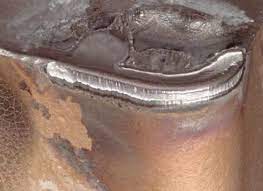
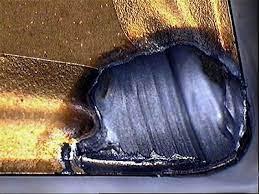
1. According to the characteristics of the processed materials and parts, the various types and grades of tool materials should be selected reasonably. Under the premise of certain hardness and wear resistance, the tool material must be guaranteed to have the necessary toughness.
2. Reasonable selection of tool geometry parameters. By adjusting the front and rear angles, main and auxiliary deflection angles, blade inclination and other angles, the cutting edge and the tool tip have better strength. Grinding a negative chamfer on the cutting edge is an effective measure to prevent tool collapse.
3. Ensure the quality of welding and sharpening, and avoid various defects caused by poor welding and sharpening. The cutting tool used in the key process should be ground to improve the surface quality and check for cracks.
4. Choose the cutting amount reasonably to avoid excessive cutting force and high cutting temperature to prevent tool damage.
5. Try to ensure that the process system has better rigidity and reduce vibration.
6. Take the correct operation method, try to make the tool not bear or bear the sudden load as little as possible.
Custom electroplated, sintered & CVD‑enhanced diamond rotary dressers for aerospace, semiconductor, new‑energy vehicle, robotics. High profile accuracy & long service life.

What Can a CVD Diamond Do? Complete industrial chain from CVD diamond plate, precision grinding to CVD / PCD cutting tool manufacturing, Moresuperhard one‑stop superhard processing solution.
Add: Zhongyuan Rd, Zhongyuan District, Zhengzhou, 450001, Henan, China
Tel: +86 17700605088


