Welcome To Our Website. Any questions about PCD cutting, brazing and grinding, Call Us:+86 17700605088

Challenges and Solutions in Grinding PDC Cutters

2026-04-30 15:33:18

A complete engineering-level technical analysis of vitrified bond diamond grinding wheels for PDC cutter, covering grinding force behavior, thermal damage mechanisms, wheel loading, dressing strategies, and precision control methods.
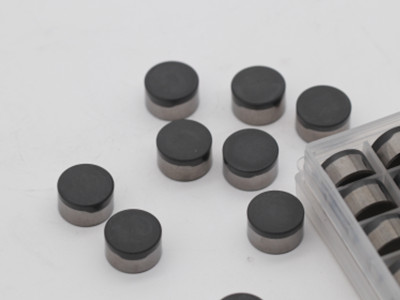
pdc cutters

1. Introduction: Why PDC Cutter Are Extremely Difficult to Grind

Polycrystalline Diamond Compact (PDC) cutters are widely used in oil drilling, mining tools, and high-wear industrial applications. They consist of a sintered polycrystalline diamond layer bonded to a tungsten carbide (WC-Co) substrate under ultra-high pressure and temperature conditions.

Key material characteristics include:

  • Hardness close to natural diamond (HV 8000–10000)
  • Highly heterogeneous structure (PCD layer + WC substrate)
  • Extremely low fracture toughness in the diamond layer
  • High thermal sensitivity (oxidation begins at ~700°C in air)

Because of these properties, PDC grinding is considered one of the most challenging processes in superhard material machining.

Among all grinding solutions, vitrified bond diamond grinding wheels have become the mainstream choice due to:

  • High rigidity and form stability
  • Excellent porosity and chip evacuation
  • Strong dressing capability
  • Stable high-precision performance

However, multiple engineering challenges still exist in real applications.
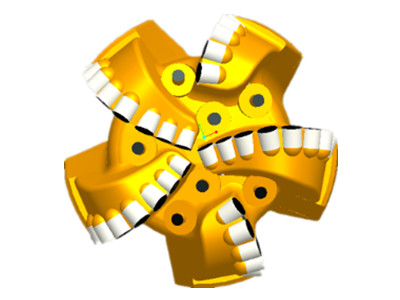
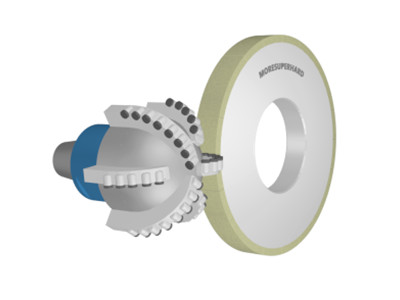
pdc drill bits

Challenge 1: Extremely High Grinding Forces and Complex Material Removal Mechanism

Material Removal Mechanism

Grinding PDC is a “diamond-on-diamond interaction” process. The removal mechanisms include micro-fracture propagation, grain pull-out, brittle fracture, and localized thermal-assisted removal.

This leads to:
  • Extremely high specific grinding energy
  • High and unstable grinding forces
  • Severe abrasive loading stress

Engineering Problems

  • High spindle load
  • Surface tearing marks
  • Edge chipping of inserts
  • Premature wheel dulling

 Solutions

  • Diamond concentration: 75%–125%
  • Use high-toughness synthetic diamond abrasives
  • Optimize feed and depth of cut parameters

grinding pdc drill bits

Challenge 2: Thermal Damage and Diamond Thermal Instability

Thermal Failure Mechanism

Diamond abrasives oxidize at ~700–800°C in air and graphitize above ~1200°C in inert environments. PDC grinding generates flash temperatures that can exceed these thresholds.

This results in:

  • Abrasive oxidation and dulling
  • Bond degradation
  • Micro-cracks in PCD layer
  • Thermal stress damage

 Engineering Solutions

  • SiO₂–Al₂O₃–B₂O₃–Li₂O vitrified bond system
  • Sintering temperature: 750–900°C
  • High-pressure coolant system (1.5–3 MPa)
  • EP additive water-based coolant

Key requirement: break the air barrier layer at high wheel speed to ensure coolant penetration.
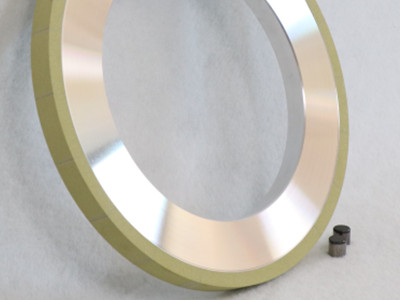
diamond grinding wheel for pdc

Challenge 3: Wheel Loading, Dulling, and Loss of Self-Sharpening Ability

 Root Cause

Vitrified bond wheels rely on controlled self-sharpening. In PDC grinding, imbalance leads to either excessive dulling or premature abrasive loss. Fine PDC debris also clogs pores.

 Solutions

  • Bond content control: 22%–28%
  • Regular dressing using diamond roller or SiC stick
  • Maintain open porous structure

Challenge 4: Surface Quality and Dimensional Accuracy Control

 Common Defects

  • Micro-cracks
  • Edge chipping
  • Vibration marks

 Engineering Solutions

  • Dynamic balance: G2.5 or better
  • Layered grinding strategy (WC → transition → PCD)
  • Controlled low-impact feed strategy
  • Optional nano polishing (Ra < 0.02 μm)

Conclusion: PDC Grinding as a System Engineering Problem

PDC grinding using vitrified diamond wheels is a multi-physics coupled system involving thermal, mechanical, structural, and fluid dynamics interactions.
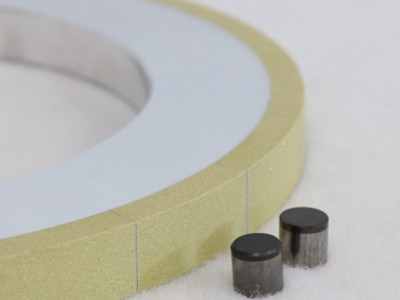
The stability of PDC grinding is not determined by wheel hardness alone, but by the balance between thermal control, self-sharpening behavior, and system-level process optimization.

cylindrical grinding wheel


  • Rising Tungsten Carbide Costs: PCD/CBN as Smart Alternatives
    30 April 2026

    Rising Tungsten Carbide Costs: PCD/CBN as Smart Alternatives

    With tungsten carbide prices soaring 200%+, PCD & CBN become cost-effective alternatives. Moresuperhard provides high-quality PCD/CBN blanks, grinding wheels & grinders to help manufacturers reduce costs and improve efficiency.

  • Challenges and Solutions in Grinding PDC Cutters
    30 April 2026

    Challenges and Solutions in Grinding PDC Cutters

    A deep engineering analysis of vitrified diamond grinding wheels used for PDC cutters, covering grinding force, thermal damage, wheel clogging, self-sharpening behavior, and precision control solutions for high-performance drilling tool manufacturing.

  Add:  Zhongyuan Rd, Zhongyuan District, Zhengzhou, 450001, Henan, China

  Tel: +86 17700605088

  WhatsApp:+86 17700605088

  E-mail: pcd@moresuperhard.com